
Quick Answer: Basement dig-out cost in Portland depends heavily on which of three different projects you actually need, and the range between them is wide enough that a blanket number would be misleading. Underpinning alone, without excavating the floor, is a much smaller job than a full crawl-space-to-basement conversion. Because soil conditions, pier count, and project scope vary so much from house to house, the only reliable way to get an accurate number is a free, no-obligation inspection with one of our estimators.
That's because "basement dig-out cost" gets used for at least three different projects that don't cost anywhere near the same amount. Here's how to tell which one you're actually looking at, and what pushes your price up or down for a Portland home specifically.
What "Basement Dig-Out Cost" Actually Covers
People searching this term are usually asking about one of three projects.
Underpinning only. Your foundation is settling or cracking, and a contractor drives piers underneath it to stop the movement and stabilize what's already there. No excavation of the basement floor, no new square footage.
Lowering an existing basement. You already have a basement, but the ceiling is too low to count as living space — Oregon generally wants at least 7 feet of clearance. A crew digs down, underpins the existing footings so the house doesn't move, and pours a new, lower slab.
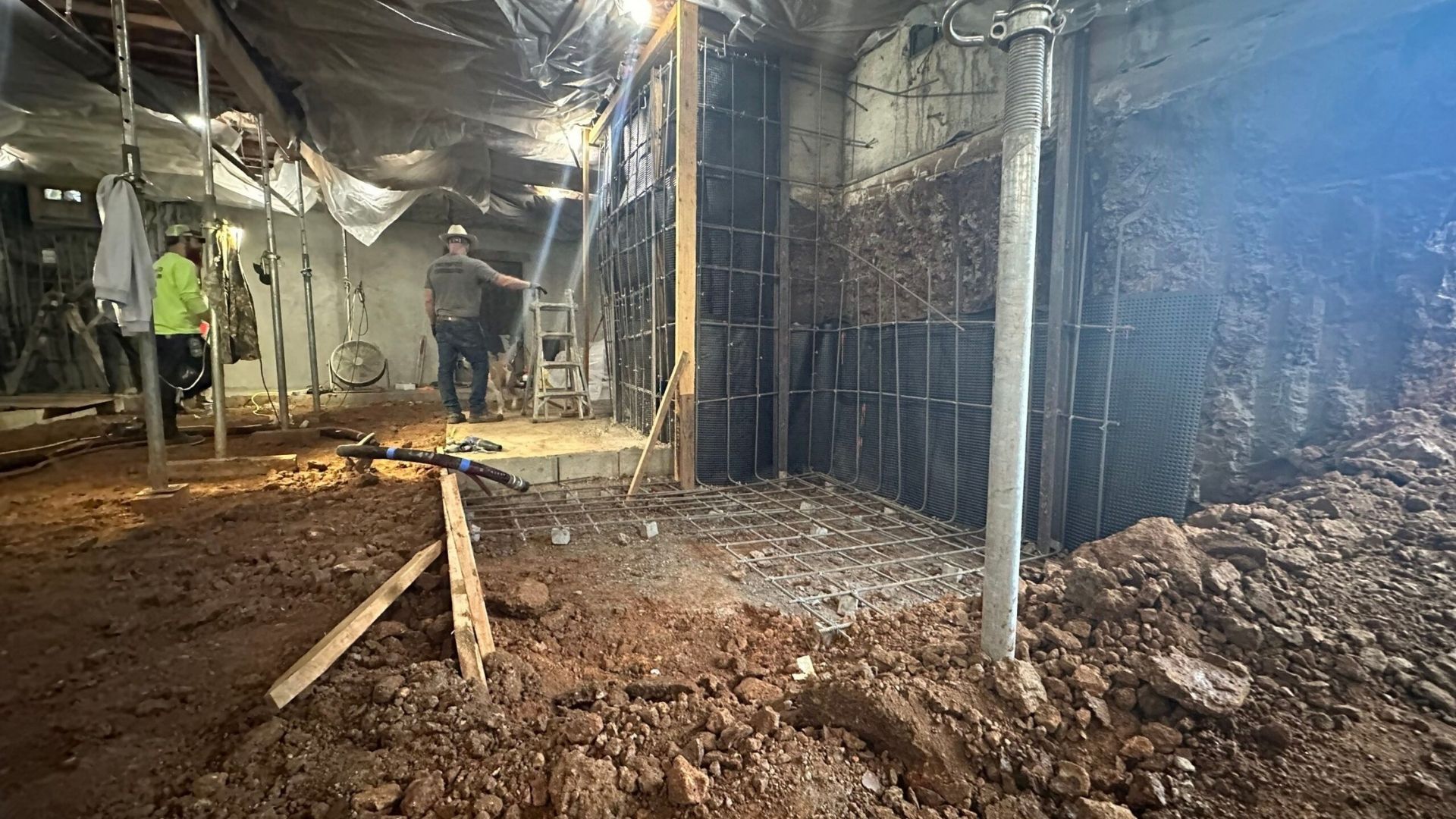
Crawl space to full basement. The most involved version. A crew supports the house on temporary shoring, excavates the entire crawl space down to basement depth, pours new footings and walls, and underpins the original foundation as it goes.
Only the second and third involve actual digging under an occupied house. Underpinning on its own is a foundation repair, not an excavation project, which is why it's priced so differently from the rest.
How the Three Project Types Compare on Price
| Project | Relative Cost | What's Included |
| Underpinning only | Lowest of the three — no excavation involved | Piers, engineering, permits |
| Lowering an existing basement floor | Priced per square foot of the remodel | Excavation, underpinning, new slab |
| Full crawl space to unfinished basement | Higher — a full structural conversion | Excavation, underpinning, new footings, structural shell |
| Crawl space to finished, livable basement | Highest — adds complete finish work on top | Everything above, plus framing, electrical, drywall, flooring |
This is a relative comparison, not a quote. Soil, access, and the condition of your existing foundation move your actual number more than the project category does, which is exactly why we don't publish blanket pricing here. A free inspection is the only way to get a figure tied to your specific home.
What Drives the Underpinning Portion of Your Project
Underpinning is priced per pier. Most homes need somewhere between 3 and 8 piers for a stabilization job, or 10 or more to underpin the full perimeter of a dig-out. Two systems dominate the market:
- Push piers, hydraulically driven to bedrock
- Helical piers, screwed into stable soil with a hydraulic torque motor
Push piers work well where bedrock sits within roughly 40 feet of the surface. In Portland's clay-heavy Willamette Valley soil, we lean toward helical piers more often than a lot of markets do. They anchor into competent soil rather than relying on bedrock depth, and that matters when the ground under your house swells and shrinks with the seasons. Pier type, pier count, and site access all move your price, and we'll walk through exactly how during your inspection. We've written more about how we make that call on our helical piles page.
Why Portland Adds Its Own Line Items
Historic housing stock. Neighborhoods like Irvington, Laurelhurst, Sellwood, and Montavilla are full of homes built with shallow crawl spaces instead of basements. That's exactly the housing type a crawl-to-basement conversion works best on, and exactly where we field the most calls. We've gone through why that conversion pencils out on our basement construction page.
Permit fees stack. Portland Permitting & Development calculates structural permit fees off your project's valuation, and the state adds a mandatory 12 percent surcharge on top. Larger dig-outs can also trigger the city's 1 percent construction excise tax. Permit fees add a real line item on top of the base project, and we factor them into the estimate we walk you through.
The rainy season affects scheduling, not feasibility. Portland gets 36 to 44 inches of rain a year, concentrated heavily between November and March. Crews who do this work properly plan for dewatering and temporary shoring, so it isn't a project you can only run in July. But scheduling around the wettest months usually keeps the job moving and the site drier.
What's Warrantied
A dig-out touches several different repair systems, and each one carries its own warranty term rather than one blanket number:
| Repair | Warranty |
| Helical Piles | Lifetime |
| Grouted Micropiles | Lifetime |
| Invisibeam | Lifetime |
| Waterproofing | Limited Lifetime* |
| Steel Adjustable Posts | 20 Years |
| Carbon Fiber Reinforcement | 20 Years |
| Steel Wall Braces | 20 Years |
| Deadman Wall Braces | 20 Years |
| Stem Wall Repairs | 20 Years |
| Shotcrete | 20 Years |
| Slab Repairs | 2 Years |
| Workmanship Warranty | Included on qualifying repairs |
*Sump pumps carry the manufacturer's 3-year warranty rather than our own term. All warranties are transferable to a future homeowner, and they apply as long as the associated invoice is paid in full. We'll go over exactly which lines apply to your specific project before any work begins.
Schedule a Free Inspection to Get Your Price
Every comparison in this guide is a starting point, not a quote. Basement dig-out costs vary enormously based on things a phone call can't answer: how many piers your specific foundation needs, and what your soil looks like. It also depends on whether your crawl space has 18 inches of clearance or 40, and what's already sitting under your slab.
The only way to get an accurate number is a free inspection. One of our estimators will walk your property and help you figure out which of these three projects actually fits your home. You'll get a real price based on your specific conditions, not a general estimate. If you're in Portland, Beaverton, Lake Oswego, or anywhere in Washington County, we can help. If you're trying to work out whether a dig-out makes sense for your house, scheduling that inspection is the fastest way to find out what your project actually costs.
Frequently Asked Questions
Is underpinning the same thing as a basement dig-out? No. Underpinning stabilizes a foundation that's already settling. It doesn't remove soil or add space. A basement dig-out always includes underpinning as one step, but underpinning alone is a much smaller project.
How much does it cost to underpin a basement without doing a full dig-out? Underpinning alone is typically the least expensive of the three project types, since it doesn't involve excavating the floor or adding square footage. Most homes need 3 to 8 piers, though severe settlement can require more. Because pricing depends entirely on your foundation and soil conditions, we'll give you an exact number after a free inspection rather than a blanket figure.
How long does a basement dig-out take? The structural work on a full crawl-to-basement conversion — excavation and underpinning — typically takes 4 to 12 weeks before finish work begins. A straightforward pier stabilization job with no floor lowering is often done in a few days to two weeks.
Do I need a permit to dig out my basement in Portland? Yes. Structural work that changes your foundation or adds living space requires a permit from Portland Permitting & Development, and most lenders and insurers will ask to see it during a future sale.
Does the dig-out cost include finishing the basement afterward? No. The structural work described in this guide covers excavation, underpinning, footings, and a waterproofed shell. Framing, electrical, drywall, and flooring are priced and quoted separately, since finish level varies so much from home to home.
Is a basement dig-out or underpinning job under warranty? Yes. Helical piles and grouted micropiles carry a lifetime warranty, steel adjustable posts and stem wall repairs carry a 20-year warranty, and slab repairs carry a 2-year warranty. All warranties are transferable to a future homeowner as long as the invoice is paid in full.
Key Takeaways
- Basement dig-out cost in Portland depends on which of three projects you need: underpinning only, lowering an existing basement, or a full crawl-space-to-basement conversion, each priced very differently.
- Underpinning alone is the least expensive of the three project types, since it involves no excavation or added square footage.
- Foundation underpinning is priced per pier, using either push piers driven to bedrock or helical piers anchored into stable soil.
- Most homes need 3–8 piers to stabilize a settling foundation, or 10 or more piers to underpin the full perimeter of a basement dig-out.
- Lowering an existing basement floor for ceiling height is typically priced per square foot of the remodel, on top of the underpinning cost.
- Portland's clay-heavy Willamette Valley soil favors helical piers over push piers, since they anchor into stable soil rather than relying on bedrock depth.
- Permit fees for a Portland basement dig-out include a mandatory 12% Oregon state surcharge, plus a 1% city construction excise tax on larger projects.
- A full crawl-to-basement conversion typically takes 4–12 weeks for the structural work alone, not including permitting or finish-out.
- Helical piles and grouted micropiles carry a lifetime warranty; steel adjustable posts and stem wall repairs carry a 20-year warranty; slab repairs carry a 2-year warranty; all are transferable if the invoice is paid in full.
- Because pricing varies so much by soil, pier count, and project scope, a free inspection is the only way to get an accurate number for your home.